Are you familiar with “ZEN”? While it is often associated with Japanese aesthetics and a unique sense of tranquility, ZEN actually refers to a spiritual practice and teaching. The landscapes that evoke a sense of Japanese beauty and calmness are referred to as “Wabi-Sabi,” which embodies the concept of awareness towards the “visible things.” It seems that many people confuse Wabi-Sabi with ZEN.
◆What is Wabi-Sabi?
Wabi-Sabi is a unique Japanese aesthetic that finds beauty in “imperfection,” “impermanence,” and “simplicity.” It is not merely an artistic style but a worldview. Rooted in Zen Buddhism, it nurtures a heart that embraces and appreciates the raw, unrefined aspects of nature and the transient nature of existence. The term consists of “Wabi” and “Sabi.”
◆What is Wabi?
Originally, Wabi referred to a state of hardship due to a significant lack of money or goods, embodying a positive meaning of accepting circumstances that do not go as planned and striving for contentment. It signifies living simply and in harmony with nature, as well as a tranquility that is detached from material wealth. It expresses a richness of spirit that seeks to enjoy rather than lament the given situation. In modern times, it refers to “the beauty found in simplicity and calmness.”
◆What is Sabi?
Sabi refers to the beauty that arises from the passage of time. It encompasses the hues of an old teapot, the texture of wood weathered by rain, and the charm of faded fabric—qualities that emerge only through the accumulation of years. Unlike Wabi, which expresses spirituality, Sabi is a concept that perceives the change of inner essence manifesting outwardly as beauty.
Wabi-Sabi is deeply ingrained in many aspects of Japanese culture. It can be seen in handmade pottery with rustic forms, a single seasonal flower displayed in a small vase, and the asymmetrical arrangement of Japanese gardens. In the tea ceremony, even cracks in a tea bowl are cherished as part of its history.
◆How to Use the Term “Wabi-Sabi”?
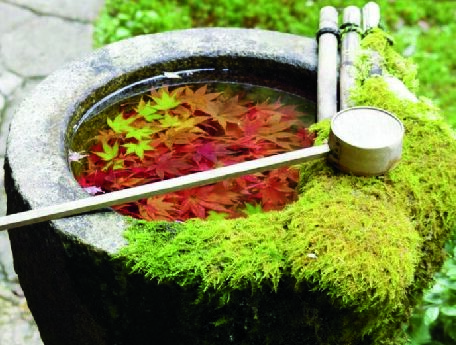
When observing moss growing on a stone basin, one may appreciate not only the beauty of the green but also reflect on the time it took to grow. The enduring nature of the stone may evoke a sense of stability. In such cases, one might say, “I feel Wabi-Sabi from this basin, and it calms my heart just to look at it.”
When autumn leaves fall, one might imagine their transience, the loneliness of the remaining branches, and the harshness of the approaching winter, expressing, “I feel Wabi-Sabi in the luster of these autumn leaves and their falling.”
As seen, Wabi-Sabi is used when one’s emotions quietly fluctuate in response to events or spaces. In today’s society, which values “perfection” and “speed,” Wabi-Sabi reminds us of the importance of savoring imperfect moments and things around us. It teaches us that within the truth that nothing is eternal and nothing is perfect, there lies a quiet beauty.
On nature-rich Vancouver Island, many scenes evoke a sense of Wabi-Sabi. Walking through lush forests in the hot summer or gazing at the restless sea, one can find that “calming feeling” where Wabi-Sabi also exists. I feel that there is a common concept between Canadians who enjoy activities like hiking and the Japanese notion of Wabi-Sabi. Let’s appreciate the beauty of nature!
This article was contributed to the September 2025 issue of Cowichan Valley Voice.
侘び寂び:不完全と無常の美
あなたは「ZEN」を知ってますか?日本らしさや独特の静けさ、として使われますが実はZENは精神的な実践や教えのことなのです。実は日本らしさや静けさを感じる風景など「目に見えるものへの意識」の事は「詫び寂び」というのです。詫び寂びこそが「日本の美の感覚に関する概念」で多くの人が「ZEN」と混同しているようです。
◆侘び寂び(わびさび)とは?
日本独自の美意識であり、「不完全」「無常」「質素」の中に美しさを見いだす哲学です。これは単なる芸術様式ではなく、世界の見方そのものです。禅仏教に根ざし、磨かれていない自然のままの姿や、移りゆくものを受け入れ、味わう心を育みます。この言葉は「侘び」と「寂び」から成り立っています。
◆侘びとは?
もともとは金銭や物品が著しく不足して苦しい様子などの自分の思い通りにならない状態を受け入れ、積極的に安住しようとする肯定的な意味・内容をもっています。自然と共に質素に生きることや、物質的な豊かさから離れた静けさを意味します。置かれている状況を悲観することなく、それをむしろ楽しもうとする精神的な豊かさを表現した言葉です。現代では、「簡素さや落ち着きの中の美」を指します。
◆寂びとは?
時の経過によって生まれる美しさ。古い急須の色合い、風雨にさらされた木の質感、色あせた布など、年月を重ねてこそ生まれる味わいです。精神性を表現した侘びとは異なり、寂びは「内面的な本質が表面的にあらわれていくその変化を美と捉える概念」です。
侘び寂びは、日本文化の多くに息づいています。素朴な形の手作りの器、小さな花瓶に一輪だけ飾られた季節の花、非対称な日本庭園の配置などです。茶道では、茶碗のひび割れさえも、その歴史の一部として愛でます。
◆「わびさび」という言葉をどう使う?
・石の蹲(つくばい)に生えたコケを見た時に、緑の美しさはもちろん、それが育つまでの時間にまで思いが巡ります。そして、石の何十年経っても変化しにくい特性から、安定感を覚える方もいるでしょう。そういった場合に、「この蹲からは侘び寂びを感じ、見ていると心が落ち着く」などと表現します。
・紅葉が散りゆく時に、そのはかなさや残った枝の寂しさ、やがて訪れる冬の厳しさを想像し、「この紅葉の艶やかさと散り際に侘び寂びを感じる」といいます。
以上のように、侘び寂びは事象・空間に対して、自身の感情が静かに揺れ動いた時などに用いるようですね。
現代の「完璧」や「スピード」を重んじる社会の中で、侘び寂びは、身の回りの不完全な瞬間や物を味わうことの大切さを思い出させてくれます。それは、何も永遠ではなく、何も完全ではないという真実の中に、静かな美しさがあることを教えてくれます。
自然豊かなバンクーバーアイランドの地には詫び寂びを感じる景色が数多くありますね。
暑い夏にみどり豊かな森林を歩いたり、波がざわめく海を眺めたりして、「心を落ち着かせる気持ち」そこに
詫び寂びも存在するのです。ハイキングなどの自然とたわむれるのを好むカナディアンと日本の詫び寂には共通する概念があると感じます。自然の美に感謝!
※この記事は、**2025年9月号の『カウチンバレー・ヴォイス(Cowichan Valley Voice)』**に寄稿されたものです。