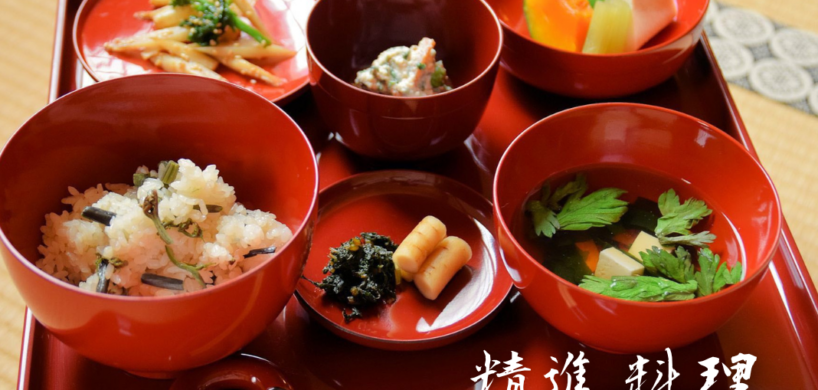
Shojin Ryori is the oldest style of vegetarian cooking in Japan, originating from Buddhist traditions that avoid killing and restrain worldly desires. It arrived from China and Korea and was further developed in Japan through Zen Buddhism.
◆What Makes Shojin Ryori Unique
Zen-style Shojin Ryori focuses on simplicity and mindfulness. Cooking, eating, and even cleaning are considered part of spiritual practice. Dishes are prepared with five basic flavors—sweet, spicy, sour, bitter, and salty—while bringing out the natural taste of ingredients.
Shojin Ryori excludes meat, fish, eggs, and also pungent vegetables like garlic, leeks, and onions, which are believed to stimulate anger and desires.
◆Five Reflections Before Meals
Practitioners recite:
1.This meal is possible thanks to many people.
2.Am I worthy of receiving it?
3.Am I free from anger and greed?
4.This food is for nourishment, not indulgence.
5.I receive it in the spirit of the Buddha.
During meals, diners sit upright, handle bowls with care, eat silently, and clean bowls afterward with tea or hot water and a piece of pickled radish.
◆Ingredients and Culinary Influence
Since animal products are not used, protein comes mainly from soybeans—“meat of the fields.” The development of tofu, miso, soy sauce, and other soy-based foods in Japan is strongly connected to Shojin Ryori.
Plant-based broths made from kombu and shiitake mushrooms replace fish stock commonly used in modern Japanese miso soup.
One of the highlights of Shojin Ryori is “mock dishes,” such as:
・Tofu or yuba shaped to resemble ham
・Konjac prepared like sashimi
・Shiitake mushrooms served like abalone
Before raw salads became common, vegetables were cooked using careful techniques like removing bitterness and slow simmering. These practices influenced Japanese cuisine and raised the standard of modern cooking.
◆Why Try Shojin Ryori?
Even for non-vegans, the mindfulness and simplicity of Shojin Ryori can bring balance and peace to everyday meals. It offers not only nourishment but also a moment to appreciate gratitude and intention.
This article was contributed to the January 2026 issue of Cowichan Valley Voice.
精進料理:日本最古のヴィーガン料理
精進料理は、日本で最も古い菜食料理で、殺生を避け煩悩を抑えるという仏教の教えから生まれました。中国・韓国から伝わり、日本では禅宗によって独自に発展しました。
精進料理の特徴
禅の精進料理は、シンプルさと心の在り方を重視します。料理・食事・片付けまでも修行と捉え、五味(甘・辛・酸・苦・塩)を意識しながら素材の味を生かします。
肉・魚・卵などの動物性食品は使わず、ニンニクやネギ類のような刺激の強い食材も避けられます。これらは怒りや煩悩を生むと考えられているためです。
食前の五観
食事の前には以下を唱えます。
- 多くの人のおかげでこの食事がある
- 自分はその食を受けるに値するか
- 心に怒りや貪りはないか
- 身体を養う食であり、快楽のためではない
- 仏と同じ心でいただく
食事中は静かに食べ、器を丁寧に扱い、食後はたくあんとお茶で器を洗います。
素材と料理への影響
動物性食品の代わりに、タンパク源として大豆(畑の肉)が使われます。豆腐・味噌・醤油などの発展には精進料理の影響が大きくあります。
味噌汁の出汁は、昆布と干し椎茸の植物性素材で深い旨味を引き出します。
精進料理の特徴として“もどき料理”があります。例として、
- 豆腐・湯葉で作るハム風
- 刺身に見立てたこんにゃく
- アワビのような食感の椎茸
生野菜が一般化する以前は、野菜は丁寧な下処理と調理が必要で、こうした技術が日本料理全体の質を押し上げました。
精進料理を試す理由
ヴィーガンでなくても、精進料理の心を整えるシンプルさは、日々の食卓に安らぎと調和をもたらします。食事が単なる栄養ではなく、感謝と気づきの時間へと変わります。
この文章は、2026年1月号 Cowichan Valley Voice に寄稿されたものです。