What is Tanabata?
Every summer in Japan, a quiet kind of magic appears.
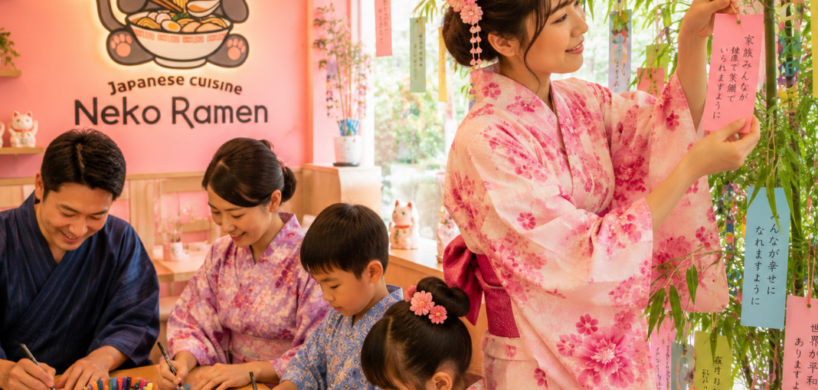
Colorful paper decorations flutter in the warm breeze. Bamboo branches stand outside homes, schools, shops, and cafés. Children and adults alike pause for a moment to write their hopes, dreams, and wishes on small strips of paper called tanzaku. These wishes are then tied to bamboo and left to dance in the wind beneath the summer sky.
This tradition is called Tanabata, or the Star Festival, celebrated on July 7.
The Story Behind the Stars
At the heart of Tanabata is one of Japan’s most beloved love stories.
Long ago, according to legend, there was a princess named Orihime, a talented weaver represented by the star Vega. Across the Milky Way lived Hikoboshi, a hardworking cowherd represented by the star Altair. They fell deeply in love and married, but became so distracted by their happiness that they neglected their duties.
The gods separated them, placing them on opposite sides of the Milky Way. Moved by their sorrow, however, the gods allowed them one reunion each year—on the seventh day of the seventh month. On that night, the lovers are said to cross the heavens and meet beneath the stars.
It is a story of love, longing, hope, and the belief that even great distances can be overcome.
Why Do People Write Wishes?
Today, Tanabata is celebrated throughout Japan with colorful decorations, festivals, and thousands of handwritten wishes. Yet despite the festivities, the tradition remains wonderfully personal.
People write wishes for their families, their future, their health, their dreams, or simply for happiness. It is a gentle reminder to pause, reflect, and imagine what might be possible.
Experience Tanabata at Neko Ramen
This July, we invite you to experience a small piece of this beautiful Japanese tradition at Neko Ramen.
We have prepared colorful wish papers and a bamboo tree where guests can write and hang their own wishes, just as families, schools, and communities do throughout Japan.
Whether your wish is big or small, serious or playful, we hope you will take a moment to add it to our bamboo tree and become part of a tradition that has connected people to the stars for centuries.
Who knows?
Perhaps on a warm July evening, somewhere between Vega and Altair, the stars are listening.
What will you wish for this Tanabata? 🎋✨
This article was contributed to the July 2026 issue of Cowichan Valley Voice.
七夕 ― 星に願いを込める日本の美しい夏の風習
七夕とは?
夏になると、日本には少しだけ特別な魔法のような時間が訪れます。
色鮮やかな飾りが風に揺れ、家や学校、お店の前には笹や竹が飾られます。子どもも大人も立ち止まり、短冊と呼ばれる小さな紙に願い事を書き、それを笹の枝に結び付けます。
風に揺れる短冊は、まるで願いが空へ向かって旅をしているようにも見えます。
この美しい風習が、7月7日に行われる「七夕」です。
星空に秘められた物語
七夕の中心には、日本で何世代にもわたって語り継がれてきたロマンティックな物語があります。
昔々、織姫という機織りの上手な姫がいました。織姫は織姫星(ベガ)、そして牛飼いの彦星は彦星(アルタイル)として夜空に輝いています。
二人は深く愛し合い結婚しましたが、幸せな毎日に夢中になるあまり仕事をおろそかにしてしまいます。怒った神様は二人を天の川の両岸に引き離してしまいました。
しかし、悲しみに暮れる二人を見た神様は、一年に一度だけ会うことを許します。それが7月7日の夜です。
この物語は、愛する人を想う気持ちや希望、そしてどんな距離も乗り越えられるという願いを象徴しています。
なぜ願い事を書くの?
現在の日本では、七夕はお祭りや華やかな飾りとともに親しまれています。しかし、その本質はとても個人的なものです。
家族の健康、将来の夢、新しい挑戦、大切な人の幸せ――人々はそれぞれの願いを短冊に託します。
忙しい日々の中で立ち止まり、自分の希望や夢について考える。七夕はそんな静かな時間を与えてくれる行事でもあります。
猫ラーメンで七夕を体験しませんか?
この7月、猫ラーメンでは日本の七夕文化を体験していただけるよう、願い事を書くための短冊と、それを結ぶための竹をご用意しています。
日本の家庭や学校、地域で行われているように、ぜひあなたも願い事を書いて竹に飾ってみてください。
大きな夢でも、小さな願いでも構いません。
あなたの願いもまた、何世紀にもわたって受け継がれてきた「星に願いを託す文化」の一部になるかもしれません。
7月の暖かな夜、織姫と彦星が再会する星空のどこかで、その願いを星たちが聞いてくれているかもしれません。
今年の七夕、あなたは何を願いますか? 🎋✨
この文章は、2026年7月号 Cowichan Valley Voice に寄稿されたものです。